
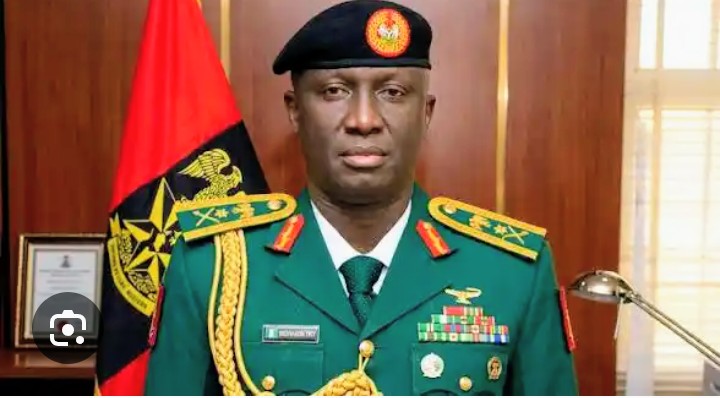

In times of prolonged security challenges, it is easy—almost convenient—for critics to amplify setbacks while ignoring measurable progress. Yet, across Nigeria’s diverse and complex theatres of operation, a different story is steadily unfolding: one of resilience, tactical evolution, and renewed operational effectiveness under the leadership of the new Chief of Army Staff.

What we are witnessing today is not случай or propaganda—it is the outcome of deliberate reforms, improved coordination, and a reinvigorated fighting spirit within the Nigerian Army.
*A Clear Shift in Operational Effectiveness*
Recent developments across Benue, Plateau, Borno, Yobe, Sokoto, Kogi, Edo, and the South-East underscore a critical truth: the Nigerian Army is not on the back foot. On the contrary, it is increasingly proactive, intelligence-driven, and responsive.
From the successful rescue of kidnapped civilians in Benue, to the interception of armed militias in Plateau, and the neutralisation of insurgents in Borno, the pattern is consistent—swift response, precision engagement, and tangible outcomes.
These are not isolated victories. They reflect:
– Improved intelligence gathering and utilisation
– Faster troop deployment and mobility
– Enhanced inter-agency collaboration
– Better morale and combat readiness among personnel
Such coordination, especially in asymmetric warfare, does not happen by chance. It is a direct reflection of leadership at the top.
*The Chief of Army Staff: Driving Reform and Results*
Since assuming office, the Chief of Army Staff has brought a renewed sense of urgency and clarity of purpose to military operations. His leadership style appears anchored on three critical pillars:
*1. Operational Aggression with Discipline*
Troops are no longer merely reacting—they are taking the fight to criminal elements. Whether dismantling terrorist camps in Kogi or repelling coordinated attacks in the North-East, the Army is demonstrating initiative and dominance.
*2. Intelligence-Led Warfare*
Modern conflicts are won as much with information as with firepower. The increasing success in intercepting logistics suppliers, uncovering IEDs, and preempting attacks shows a system that is becoming smarter, not just stronger.
*3. Joint Force Synergy*
The collaboration between the Army, Air Force, Navy, Police, DSS, and local security groups has significantly improved. Operations in Imo and other regions highlight a unified national security architecture—something that has long been advocated but is now visibly taking shape.
*Addressing the Culture of Criticism*
It must be said plainly: criticism is not inherently wrong in a democracy. However, what is deeply problematic is the pattern of uninformed, selective outrage that ignores context, dismisses progress, and undermines morale.
Those who hastily label every security incident as evidence of failure often:
– Ignore the complexity of asymmetric warfare
– Overlook the sacrifices of frontline personnel
– Fail to acknowledge the vast geographical and logistical challenges involved
Worse still, some narratives are built on speculation, ethnic bias, or incomplete information—such as prematurely attributing crimes to specific groups without verification.
This does not help the nation. It weakens it.
*The Reality of the Battlefield*
Nigeria is not facing a conventional war. The threats are:
– Decentralised
– Embedded within local communities
– Adaptive and unpredictable
From insurgents and bandits to kidnappers and economic saboteurs, the battlefield is fluid. Success, therefore, must be measured not by the absence of incidents, but by the capacity to respond, contain, and degrade threats over time.
By this standard, the Nigerian Army is making undeniable progress.
*The Human Element: Courage and Sacrifice*
Behind every operation report is a human story—soldiers who leave their families behind, who endure harsh terrains, who confront danger daily so that millions of Nigerians can live in relative safety.
Some pay the ultimate price.
To reduce their efforts to mere statistics or dismiss them outright is not just unfair—it is unjust.
*A Call for National Support*
The progress being recorded today must be sustained, and that requires more than military effort. It demands:
– Public cooperation with security agencies
– Responsible media reporting
– Community vigilance against criminal infiltration
– Constructive, informed criticism where necessary
Most importantly, it requires national unity in purpose.
*Conclusion: A Force Worthy of Confidence*
The Nigerian Army, under the leadership of the Chief of Army Staff, is demonstrating that with the right direction, commitment, and strategy, meaningful progress is possible—even in the face of complex security challenges.
The gains may not always make screaming headlines, but they are real. They are measurable. And they are building momentum.
Rather than constant condemnation, what the Armed Forces deserve at this critical time is recognition, encouragement, and unwavering support.
Because beyond the noise of criticism lies a simple truth:
these men and women are standing between order and chaos—and they are holding the line.
About the Author