
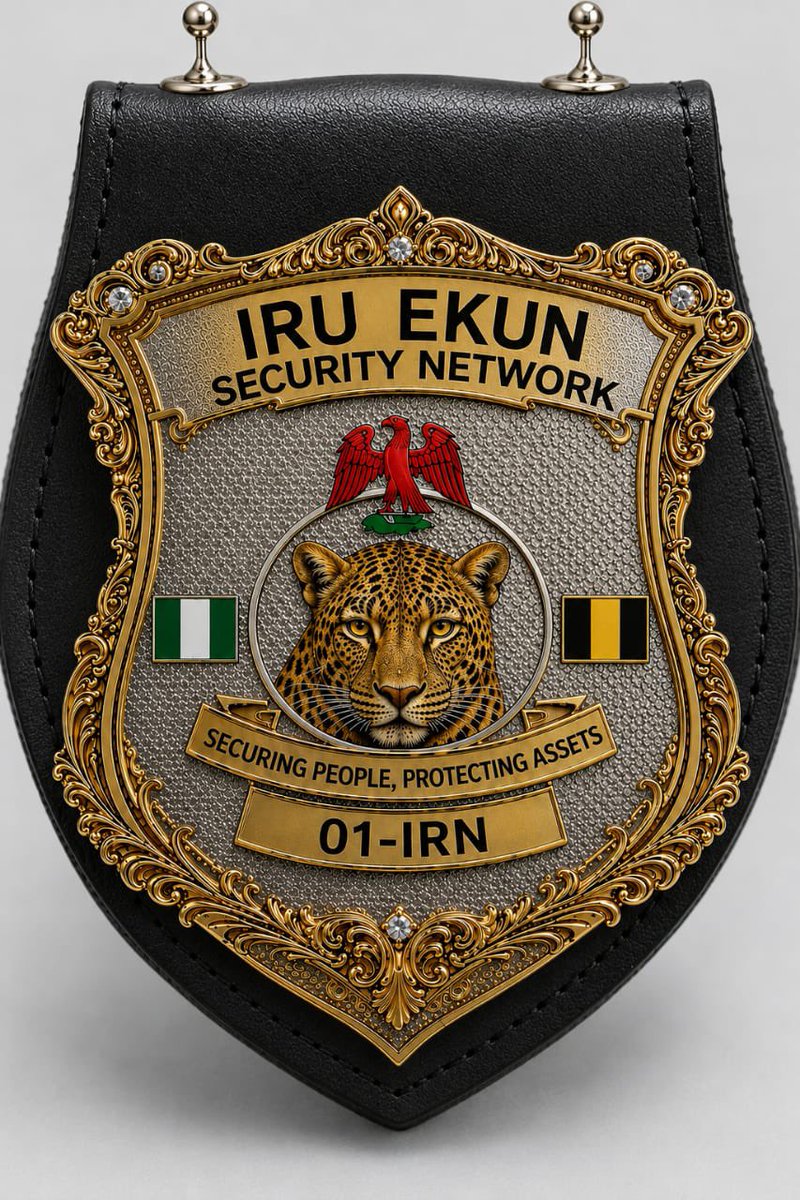

The recent discussion surrounding the proposed licensing of the security outfit associated with Sunday Igboho, popularly known as Iru Ekun Security Network, has generated mixed reactions across the Southwest and Nigeria as a whole. While many people welcome any effort aimed at combating insecurity, terrorism, kidnapping, and banditry in the region, there are still serious concerns that must be critically examined before placing excessive hope on the effectiveness of this new security outfit.
To begin with, I do not have any objection to the government granting operational approval or licence to Iru Ekun Security Network. After all, Nigeria already has several licensed private and regional security outfits operating across different states and regions. Therefore, it would not be out of place for another security network to emerge in response to the worsening insecurity in the country.

However, my major concern is the unrealistic expectation by some people who believe that the approval of this security outfit alone will automatically lead to the total defeat of terrorists, kidnappers, and criminal elements in the Southwest. This belief may be overly optimistic and disconnected from the realities on ground.
One of the biggest limitations facing such a security outfit is the issue of weaponry. In Nigeria, the use of sophisticated weapons is strictly regulated by the federal government. It is highly unlikely that any private or regional security outfit would be legally permitted to carry military-grade weapons capable of confronting heavily armed terrorists and bandits. Criminal groups operating today possess dangerous firearms, advanced ammunition, and in some cases even superior combat capabilities compared to local security operatives. Therefore, expecting a lightly equipped regional outfit to single-handedly conquer terrorism may amount to wishful thinking rather than practical reality.
Another concern is the possibility of politicisation. Since the security network is closely associated with a politically exposed and controversial figure like Sunday Igboho, there is fear in some quarters that the outfit may eventually become influenced by political interests rather than remaining fully committed to its original purpose of protecting lives and properties. Nigeria has witnessed situations where institutions or organisations established for public purposes gradually became tools for political intimidation, vendetta, or ethnic bias. These fears may not be entirely unfounded and should not be ignored.
There is also the issue of accountability and neutrality. Security organisations are expected to operate with professionalism, fairness, discipline, and respect for human rights. If adequate checks and balances are not put in place, there is a risk that such an outfit could become selective in its operations or be used to witch-hunt perceived opponents or certain groups of people. Security should never be built around sentiments, emotions, or personal loyalty to an individual. It must be institutional, lawful, and accountable to the people.
Furthermore, creating multiple fragmented security outfits may not necessarily solve the insecurity problem if there is poor coordination among agencies. Instead of multiplying regional networks with overlapping responsibilities, many people believe that the existing Western Nigeria Security Network, popularly known as Amotekun, should be strengthened, modernised, and properly funded. Since Amotekun already operates across the six Southwestern states, it has a broader structure and legal framework that can be improved upon.
The focus should therefore be on making Amotekun more formidable through better training, intelligence gathering, technological support, inter-agency collaboration, and improved welfare for personnel. If constitutionally possible, there should also be discussions around empowering such regional security outfits with better operational capacity to effectively support conventional security agencies against terrorism and kidnapping.
The insecurity challenge in the Southwest and Nigeria generally is deeper than the activities of one man or one security outfit. Terrorism, banditry, kidnapping, and organised crime require coordinated efforts involving the federal government, intelligence agencies, local communities, state governments, and regional cooperation. No individual should be viewed as a messiah who alone can solve such a complex national crisis.
At this critical moment, what Nigerians truly desire is a Southwest where people can travel freely without fear of abduction, farmers can return safely to their farms, students can attend school without fear of kidnapping, and communities can sleep peacefully at night. The safety of lives and property should remain the ultimate priority above politics, ethnicity, or personal interests.
As we continue to hope for improved security, we must also remember and pray for the safe release of abducted students and teachers in Oriire Local Government Area of Oyo State where gunmen reportedly abducted schoolchildren and teachers and other innocent Nigerians currently being held captive by terrorists and kidnappers across the country. Their suffering reminds us that the fight against insecurity requires serious national commitment, not mere emotional excitement or political symbolism.
Indeed, the journey towards lasting peace and security in Nigeria is far from over.
Not yet Uhuru.
‘Jide Alofe
Prodigy Times Media House.
About the Author